![European American Chamber of Commerce New York [EACCNY] | Your Partner for Transatlantic Business Resources](https://eaccny.com/wp-content/uploads/2020/06/eaccny-logo.png)
Blog | This blog post is part of a special series based on the April 2026 Commodity Markets Outlook, a flagship report published by the World Bank. This series features concise summaries of commodity-specific sections extracted from the report.
Australian thermal coal prices reached $150/mt in early June, fueled by supply disruptions in China, export uncertainty in Indonesia, and rising summer electricity demand, before retreating sharply after the announcement of an end to military operations in the Middle East. Earlier in March, prices jumped about 20 percent (m/m), as the outbreak of conflict in the Middle East and the disruption of natural gas shipments pushed power generators toward coal. Prices stayed elevated through April and May as conflict in the Middle East persisted.
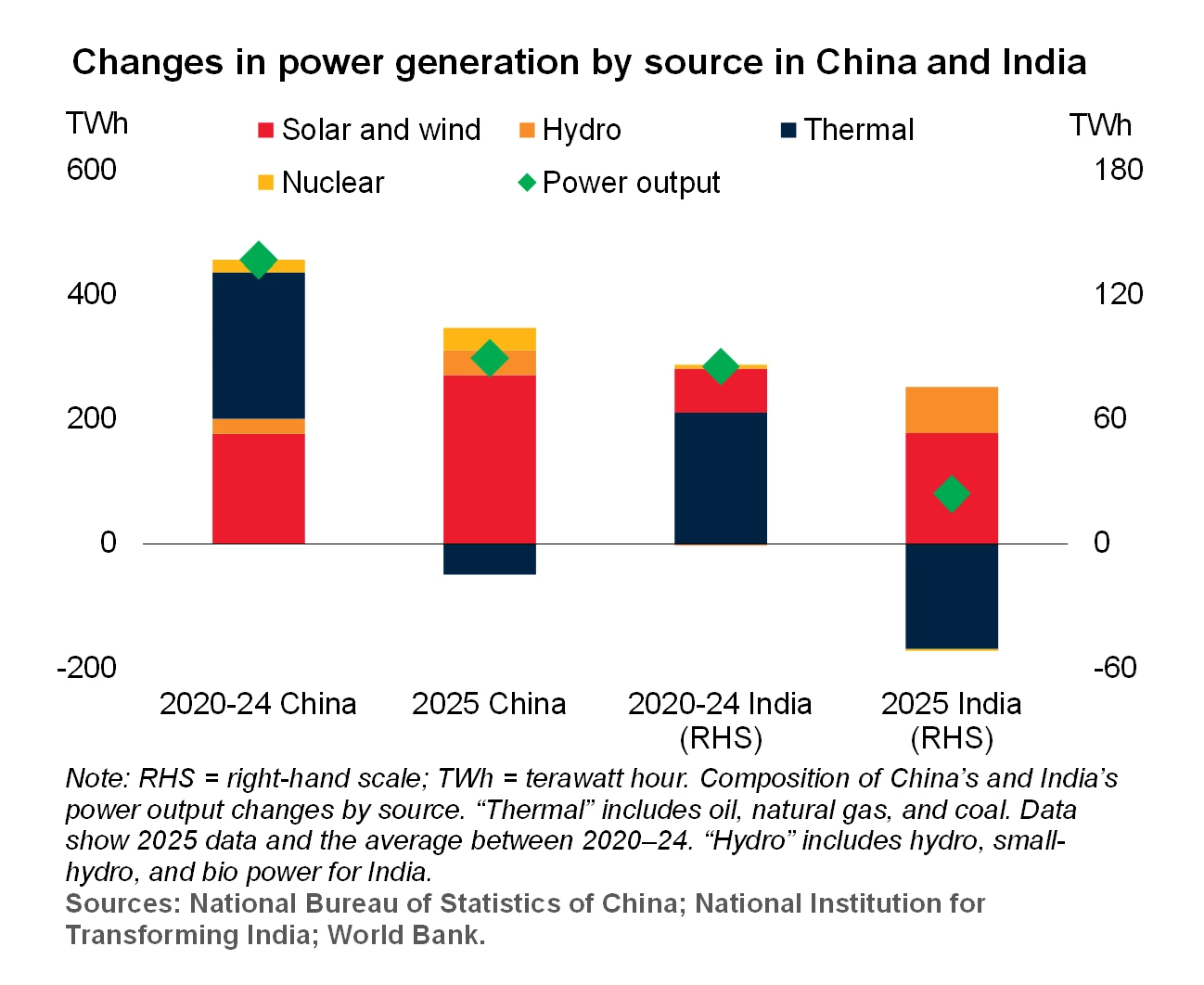
Global coal consumption edged up in 2025 (y/y), and demand is now set to hold firm in 2026 as conflict-driven energy disruptions reshape power generation. Last year’s gains were concentrated in Eurasia and the United States, where consumption expanded by 10 percent on stronger power demand tied partly to surging data-center activity and substitution away from costlier natural gas. In China and India, the two largest consumers, robust solar, wind, and hydropower generation held coal demand in check, while European Union demand edged down. In 2026, global thermal coal demand is projected to stay roughly flat, partly compensating for interrupted gas supplies from the Middle East. Increases are expected to center in China and, especially, India, where governments are turning to domestic coal to shore up energy security; U.S. consumption is seen holding steady after last year’s increase, while Europe’s continues to decline—though more slowly than before the conflict.
Global thermal coal supply was little changed in 2025, and production is set to decline by roughly 1 percent in 2026 while still meeting demand. Output gains in China, North America, and Eurasia last year offset cuts by Australia and Indonesia, the two main exporters. Notably, both China and India intensified efforts to substitute domestic production for imports to bolster energy security—a shift that may prove durable, leaving exporters to adjust to shrinking international demand. In 2026, Asia Pacific supply is expected to decline, mainly because of Indonesia’s lower production targets, while India’s output surges and China’s rises moderately in response to conflict-related trade disruptions. European production continues to shrink, while output in the United States holds steady. International coal trade is forecast to ease as Indonesia restrains the volumes available for export. Adding to supply-side pressure, diesel shortages and soaring diesel prices stemming from the Gulf conflict are lifting producer costs and, in extreme cases, capping output.
The Australian coal price is projected to rise 20 percent in 2026 (y/y) to average $130/mt before falling 12 percent in 2027, with risks to the forecast broadly balanced. The forecast assumes that conflict-related disruptions to Middle Eastern energy supply keep coal substituting for natural gas in power generation, particularly across Asia Pacific and Europe. Upside risks dominate the near term: extended delays in natural gas trade normalizing after the reopening of the Strait of Hormuz would prolong the surge in coal-fired generation, while broader-than-expected AI-driven electricity demand could bring underutilized coal plants back online in China and the United States. In that case, U.S. consumption could again exceed its assumed trend decline. The main downside risks run the other way: stronger-than-expected renewable generation—especially if the sharp rise in Chinese and Indian solar and wind output in 2025 continues—and any unexpected rebound in Indonesian exports would pull prices below the baseline.