


![European American Chamber of Commerce New York [EACCNY] | Your Partner for Transatlantic Business Resources](https://eaccny.com/wp-content/uploads/2020/06/eaccny-logo.png)
Trade & Logistics Headlines for Q1 2026: Changing Trade Lanes, Red Sea Opening, & Tariff Uncertainty Remains
Global Ports
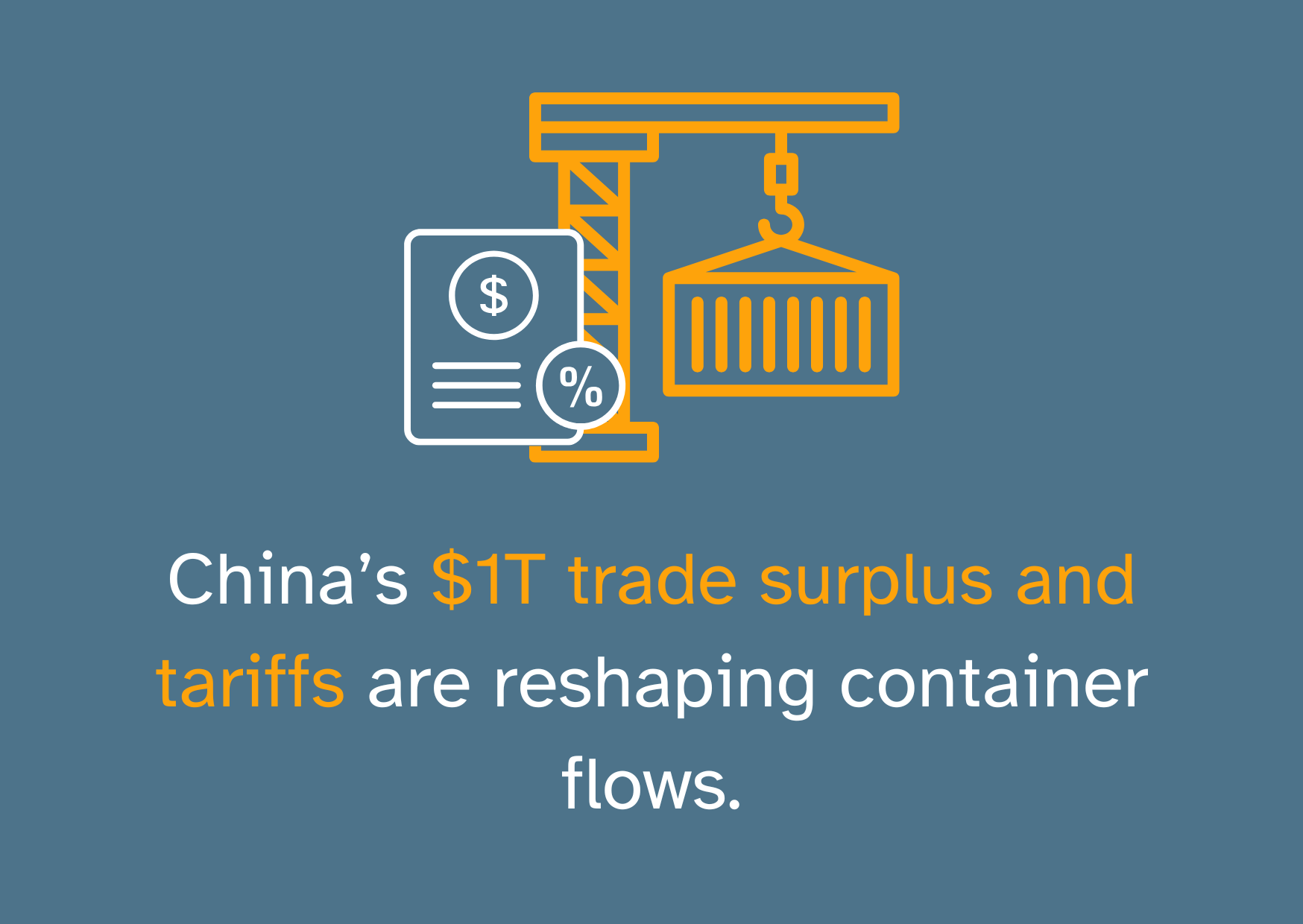
The Headlines: Global ports will be navigating a volatile start to the year as shifting trade imbalances and uneven demand reshape global cargo flows. 2025 closed with news of China’s expanding trade surplus, with an expected result being growing equipment imbalances and other network inefficiencies. At the same time, global trade is reaching record value levels, but growth momentum is slowing, putting pressure on ports to handle greater complexity rather than simply more volume.
What’s Important: As demand continues to shift, ports and importers will need to adapt. Tighter vessel capacity management, changing port rotations, and potential congestion driven by regulatory compliance and container imbalances are expected in 2026. Better planning around routing and lead times will be critical to avoid rising costs and service delays. Companies should look for technology-forward partners to improve visibility across their supply chains, ensuring suppliers, carrier partners, and customers are on the same page.
European Update
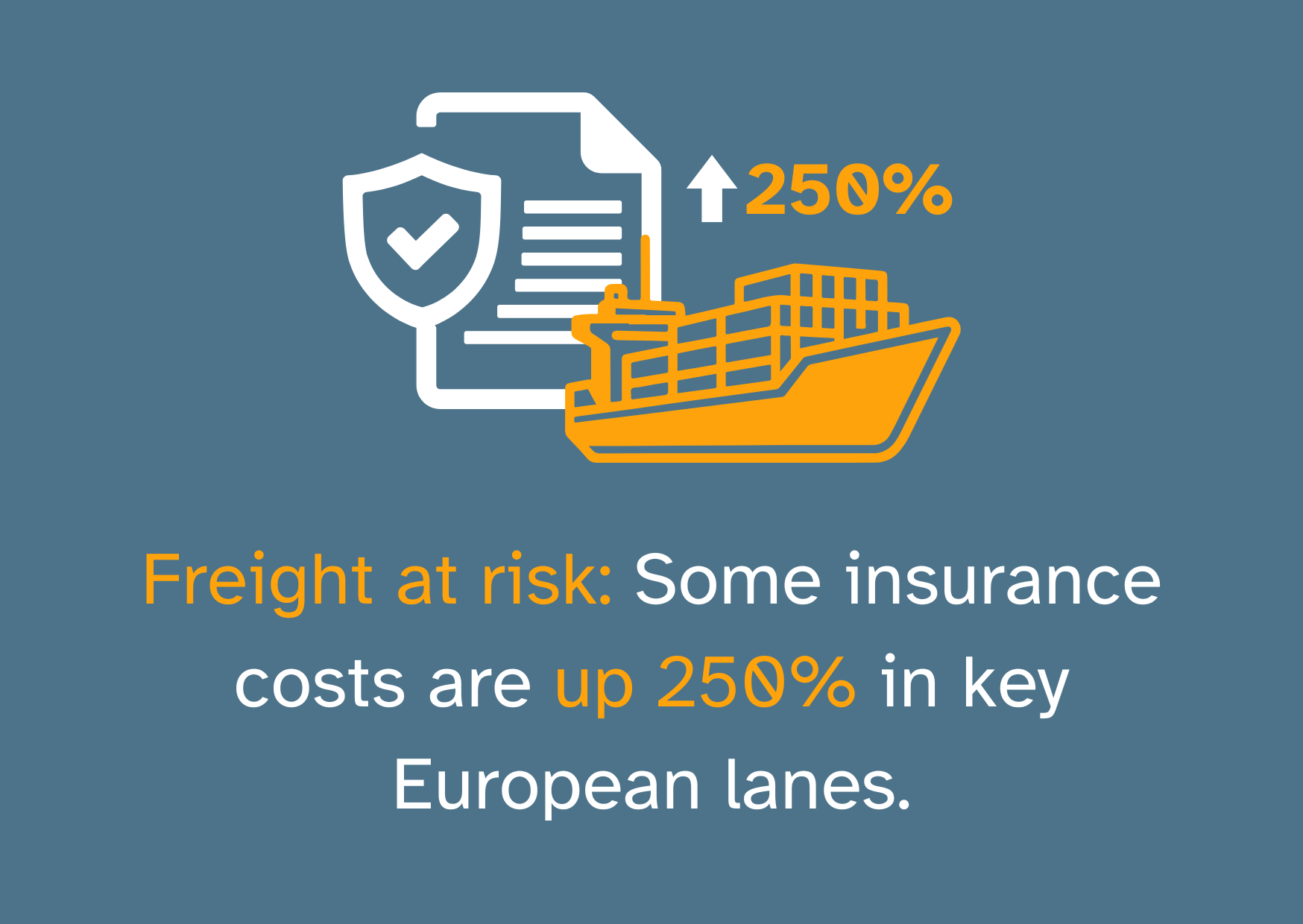
The Headlines: Europe’s supply chain continues to be reshaped by geopolitical risk, more so than market demand. Rising security threats in the Black Sea and Red Sea are offsetting some of the upside from the expected return of Suez traffic. War-risk insurance premiums have surged, driving pressure on freight costs upward. Carriers are reallocating capacity from weaker Asia–US trades into Europe, while China–Europe rail continues to gain traction as an alternative.
What’s Important: European importers are facing a cost and risk management challenge. Routing decisions, insurance exposure, and mode flexibility (ocean vs. rail vs. air) are becoming more critical when planning. This matters because geopolitical risks remain and can directly translate into higher costs and reduced schedule reliability. Expect Europe to remain one of the most complex regions to operate in during Q1.
Ocean Freight
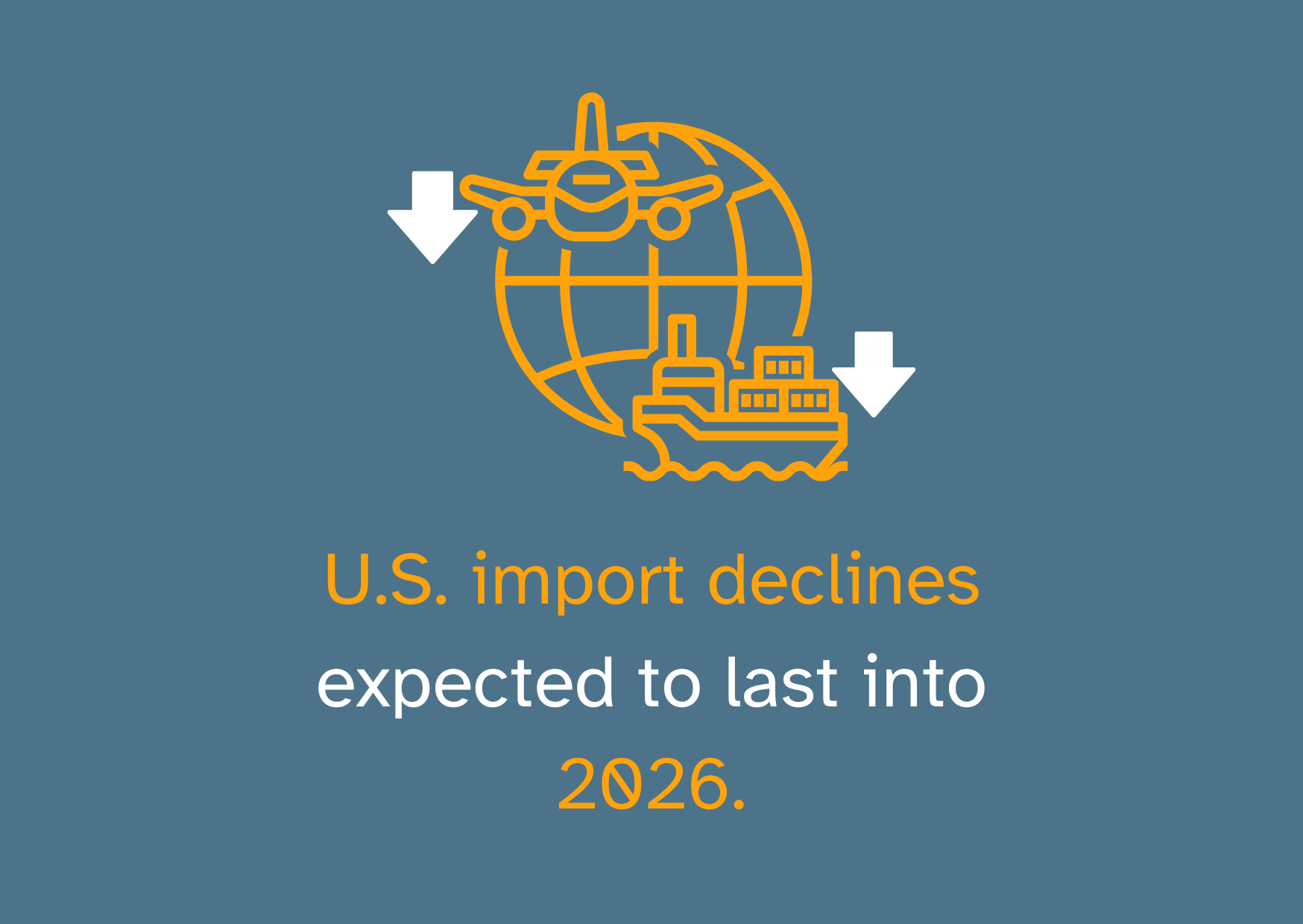
The Headlines: Ocean freight markets may be poised for a prolonged soft-demand cycle, with U.S. import volumes expected to decline in 2026. This, even as global capacity remains elevated. Geopolitical disruption will remain the theme, along with uneven demand, leading to more volatile market rates even while underlying cargo fundamentals point to oversupply.
What’s Important: For most importers, ocean freight is no longer only about demand-driven rates; it’s now a pricing environment shaped by geopolitics and global network design. As is the case during any period of disruption, flexible routing and diversified options need to be part of every company’s strategy. Even in a down market, unexpected rate spikes and service uncertainty can quickly erode operating margins and service to customers.
Air Freight
The Headlines: Global air cargo closed 2025 at record demand levels, with volumes up more than 4% year over year and eight consecutive months of growth. Capacity has expanded alongside passenger recovery, but demand is becoming more industry-specific. Momentum remains positive into 2026, though recent data show early softening in e-commerce growth, even as overall airfreight demand remains elevated.
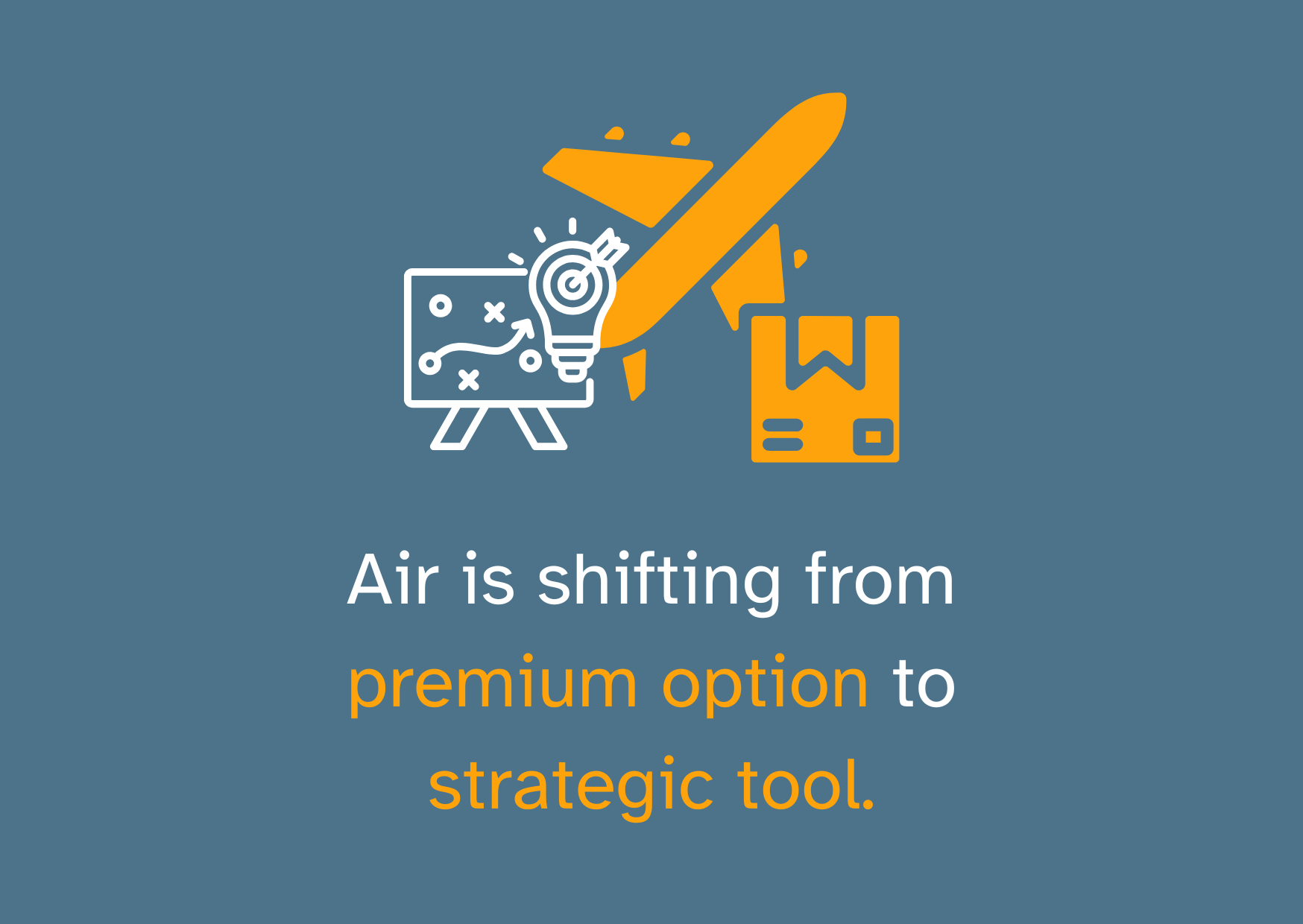
What’s Important: For shippers, air freight is increasingly becoming a precision tool, not just a premium alternative to ocean. Now is a good time to rethink how your company is using air freight because things are changing. It is important because, as air networks evolve, shippers without a clear strategy risk higher costs and reduced access during peak periods.
North America Inland Freight Trends
The Headlines: U.S. inland freight markets remain uneven, with intermodal volumes posting modest year-over-year gains even as overall rail traffic remained mixed into late 2025. Talk of railroad consolidation is adding uncertainty, as shippers and truckers weigh whether expanded rail networks will compete with or complement long-haul trucking. Meanwhile, truckload markets remain soft, with excess capacity and muted demand keeping spot and contract rates under pressure.
What’s Important: The inland market currently favors buyers, with trucking rates near cyclical lows and intermodal offering selective cost advantages on longer lanes. However, reliability, network changes, and future rail strategy matter as much as price, particularly if rail consolidation or volume recovery tightens capacity later in 2026. This is important because decisions can be made now to preserve potential cost savings while protecting service as market conditions eventually rebalance.
U.S. Logistics Manager’s Index
The Headlines: The November 2025 Logistics Manager’s Index (LMI), the latest data available, came in at 55.7, down slightly from October and the lowest reading since June 2024. However, it remains above the 50 threshold, indicating overall expansion. The drop reflects a historic contraction in warehousing utilization as inventories built through much of 2025 are being used up. In contrast, transportation metrics remain relatively strong, with transportation prices rising at their fastest pace since early 2025.
What’s Important: A mixed LMI seems to indicate a transitioning market rather than any contraction. The rare drop in warehouse utilization suggests that storage tightness is loosening, offering relief after a sustained period of elevated costs. It also highlights how imbalances between inventory and space can quickly shift. Meanwhile, rising transportation prices relative to capacity underscore the need for strategic planning around mode choices and pricing volatility as we head into 2026.
Supply Chain Risk
The Headlines: The Supply Chain Risk Management Index for the first quarter of 2026 indicates an increase in overall risk, with six of ten risk categories rising. Economic Risk emerged as the greatest risk concern at 77.32, up significantly from 72.29, reflecting renewed concerns about economic conditions. These include inflation, interest rates, and currency volatility. Cybersecurity and Data Risk ranked next at 77.27, down slightly from 78.31. Government Intervention Risk ranked third at 76.29, declining modestly from 77.11, suggesting continued but stabilizing concerns around regulatory changes and trade policies.
What’s Important: Although Government Risk fell to third on the list, the category remains a key concern. The use of tariffs as a threat by the U.S. (and increasingly by other governments) is ever-present. The uncertainty hanging over supply chains is not going away, and requires all importers to stay informed about new announcements and how they’re impacted.

Trade Tariffs and Their Real Impact
The Headlines: Even as supply chains await the U.S. Supreme Court decision on the legality of IEEPA tariffs, data shows they’re becoming a sustained drag on U.S. import volumes. While tariffs were intended to accelerate reshoring, early results show limited manufacturing relocation and increased cost volatility across global supply chains. Reports are that uncertainty around future trade policy is also delaying port and infrastructure investment, adding to the pressure companies are feeling from geopolitics and other market challenges.
What’s Important: The trade war appears to be moving into a new phase. The future of IEEPA tariffs is uncertain (although likely to be known in the coming weeks). For importers, tariffs now represent a structural planning constraint, not a short-term policy variable. Sourcing decisions, network design, and port selection need to be made with the knowledge that uncertainty exists. This matters because tariff-driven uncertainty amplifies disruption risk, constrains long-term capacity improvements, and ultimately shifts cost and reliability burdens back onto supply chains.
